

The Third Circuit affirmed denial of an injunction to prevent a biosimilar manufacturer from launching a biosimilar version of the blockbuster drug, Stelara (ustekinumab), under a third-party’s private label. Although the district court found the movant likely to succeed on the merits of its contract-based claims, the Third Circuit held that it failed to make the required clear showing of irreparable harm.
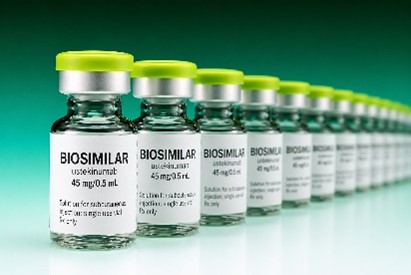
Johnson & Johnson and Janssen Biotech, Inc. (collectively, “Janssen”) filed a breach of contract suit against Samsung Bioepis Co. Ltd. (“Samsung”) in the U.S. District Court for the District of New Jersey after Samsung sublicensed its Stelara biosimilar (SB17) to Quallent Pharmaceuticals, a Cigna subsidiary, for distribution under Quallent’s own private label. Janssen alleged this violated a settlement agreement limiting sublicenses to commercialization partners selling “on behalf of” Samsung — not under their own label. Janssen sought a preliminary injunction, arguing that private-label distribution would cause irreparable harm due to hard-to-reverse losses in market share, competitive position, and negotiating leverage. The District of New Jersey denied preliminary injunction, finding that although Janssen was likely to succeed on the merits of its contract claims, it had failed to prove irreparable harm.
The Third Circuit Affirmed. Janssen did not argue brand-loyalty, claim reputational harm, or pursue a price-erosion theory, and the court treated its references to “customer relationships” and “negotiation status” as repackaged lost-sales arguments tied to the possibility that Cigna’s pharmacy benefits manager might favor Quallent’s private-label biosimilar product. The Third Circuit rejected the argument that damages need only be difficult to calculate — in contract cases the question is whether damages are impracticable to measure. The court was equally unpersuaded by the negotiating-leverage theory, finding it too speculative absent concrete proof of immediate injury.
What makes the decision notable is the court’s refusal to import irreparable-harm logic from other doctrinal settings. The panel distinguished prior cases involving the Lanham Act, brand-loyal consumers, measurable market effects, and declined to extend trademark- or patent-style irreparable harm reasoning to a breach-of-contract claim, where money damages remain the default remedy.
The decision underscores a practical drafting lesson for those in the biologics and biosimilars industry: originators that want to bar private-label commercialization should say so expressly by specifying whether partners may sell under their own label, whether insurer, provider, or pharmacy affiliates may participate, and what prelaunch disclosures are required, because general sublicensing limits and “on behalf of” language lacks clarity and will invite dispute. More generally, the opinion indicates that parties seeking emergency relief in any breach-of-contract case need a defendant-specific irreparable-harm record, not just a theory that market entry will disrupt a complex market. It also makes clear that the mere presence of intellectual property rights in a contract does not mean a court will automatically import patent- or Lanham Act-style irreparable-harm reasoning when evaluating preliminary injunctive relief for breach of that contract.